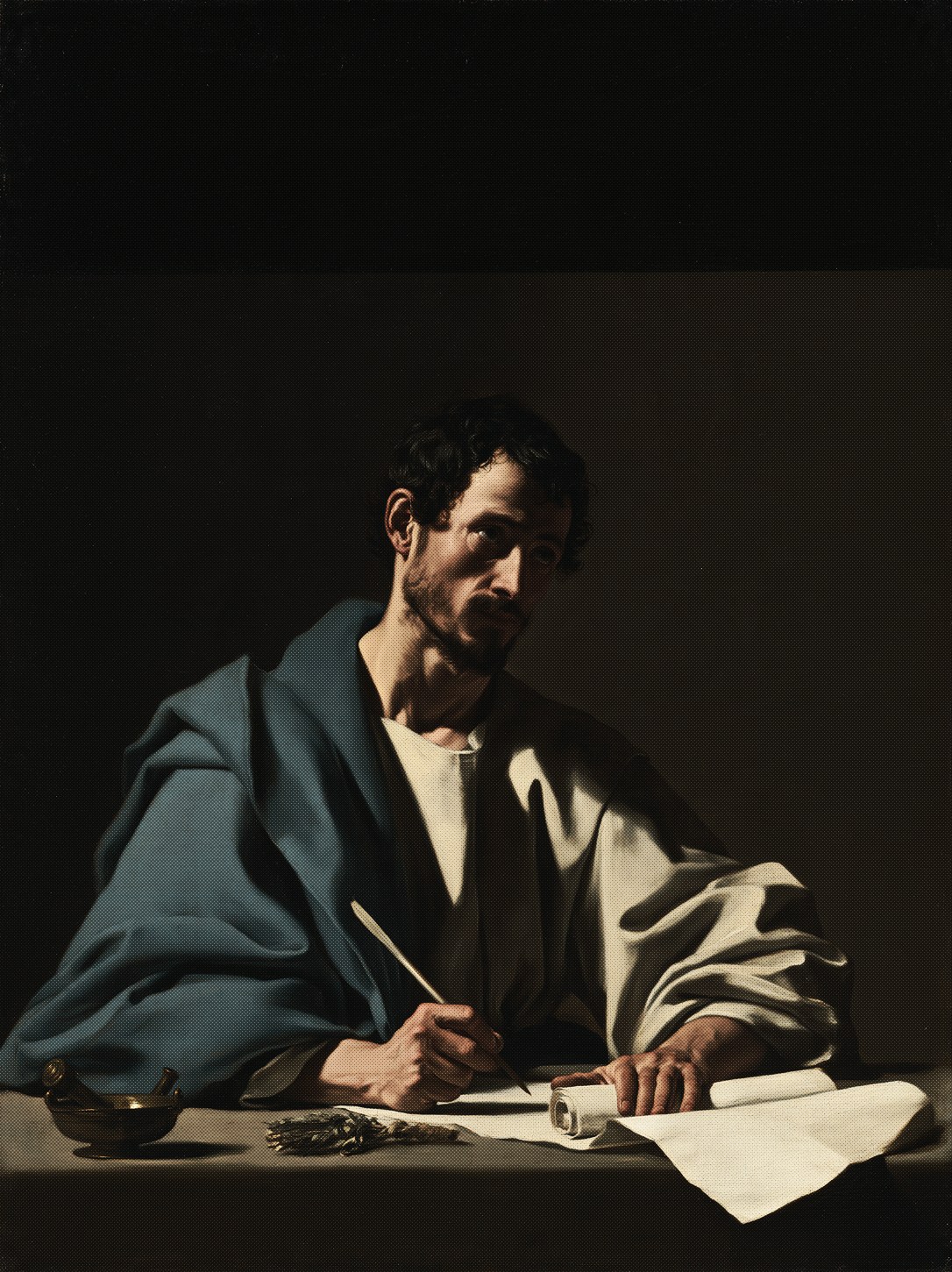
Saint Luke the Evangelist
- Born
- 1st century · Antioch, Syria (Antakya, Turkey)
- Died
- 1st century · Thebes, Greece
- Feast day
- 18 October
- Canonized
- Pre-Congregation
Patron of
- physicians
- surgeons
- artists
- painters
- sculptors
- notaries
- bookbinders
- miniaturists
- goldsmiths
- butchers
- brewers
- Padua
Luke belonged to the second generation of Christians, and the New Testament tells us very little about him. Paul names him as a fellow worker in his letter to Philemon, calls him a beloved physician in the letter to the Colossians, and writes in a letter to Timothy that Luke alone was with him. Scholars debate whether Paul wrote Colossians and the letter to Timothy himself, but Philemon is widely accepted as his own, and it confirms that a co-worker named Luke existed. His birth date, parents, training, conversion, and the year of his death are not known.
Tradition, going back at least to the historian Eusebius of Caesarea, says that Luke came from Antioch in Syria, one of the great cities of the Roman East and an early home of Christian communities open to non-Jews. He is usually thought to have been a Gentile, an inference drawn partly from the way Colossians lists Paul's Jewish and non-Jewish co-workers separately. The polished Greek of his writings shows an unusually well-educated author.
Church Fathers such as Jerome and Eusebius credited Luke with both the third Gospel and the Acts of the Apostles. His Gospel opens with two chapters on the birth and childhood of Jesus, in which Mary stands out as the servant of the Lord and blessed among women. Its central section gathers Jesus' teaching on his journey from Galilee to Jerusalem. Acts follows another journey, the spread of the Gospel from Jerusalem through Asia Minor and Greece to Rome, with Peter and Paul as its leading figures and the Holy Spirit as its true protagonist.
Several passages in Acts are told in the first person plural, beginning in the sixteenth chapter and returning in the closing chapters that describe the voyage to Rome. Tradition reads them as signs that Luke was traveling at Paul's side, though scholars have offered other explanations.
By tradition Luke died at Thebes in Greece at the age of eighty-four, and a later account says he was hanged from an olive tree, although not everyone accepts that he was a martyr. His relics are venerated at Padua. Because Paul called him a physician, doctors look to him as their patron, and an old tradition that he painted an icon of the Virgin Mary made him the patron of artists too. In art he appears with a book and pen, often beside a winged ox.
Saint Luke the Evangelist, pray for us.
Media

EWTN

EWTN
EWTN

EWTN
Art
Tondo of Saint Luke the Evangelist
Donatello · 1428
Public domainSaint Luke Drawing the Virgin
Rogier van der Weyden · c. 1440
Public domainSaint Luke Painting the Virgin
El Greco · 1560
Public domainSaint Luke
Frans Hals · 1625
Public domainSaint Luke as a Painter, before Christ on the Cross
Francisco de Zurbarán · 1630
Public domainStatue of Saint Luke
Nanni di Banco
Photo by Sailko · CC BY 2.5