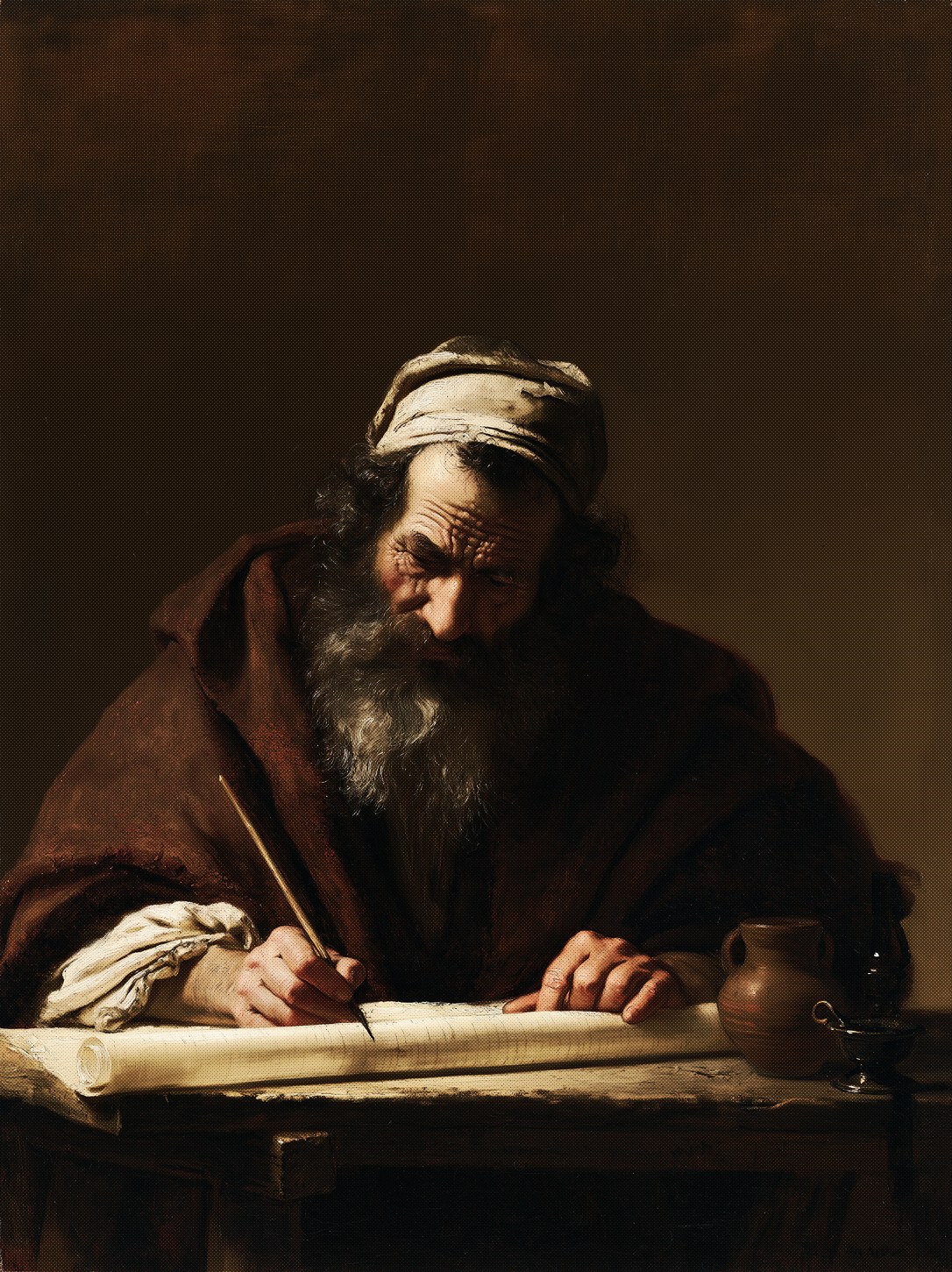
Saint Mark the Evangelist
- Born
- 1st century
- Died
- c. 68 · Alexandria, Egypt
- Feast day
- 25 April
- Canonized
- Pre-Congregation
Patron of
- Venice
- Egypt
- notaries
- barristers
- painters
- glaziers
- opticians
- interpreters
- secretaries
- cattle breeders
- shoemakers
- tanners
Mark is known only from the Acts of the Apostles and from a few letters of Peter and Paul. He was not a disciple of the Lord and probably never knew him, though some scholars identify him with the young man in the Gospel of Mark who followed Jesus after his arrest in Gethsemane, wrapped in a linen sheet, and escaped naked when soldiers tried to seize him. His Jewish name was John, and Mark was the name he used in the Greek and Roman world. Tradition makes him the son of a well-off widow named Mary, who put her house in Jerusalem at the Master's disposal. It holds that the Last Supper took place in its large room and that the apostles gathered there after the Passion until Pentecost. Mark was one of the first baptized by Peter, who often visited that house and called him his son in a spiritual sense.
In 44, when Paul and Barnabas returned to Jerusalem from Antioch, they stayed in Mary's house. Barnabas was Mark's relative. Mark listened to their accounts of the spread of the Gospel at Antioch and went back with them. He traveled with them on the first missionary journey as far as Cyprus, but when the way turned toward the rough, marshy country of the Taurus mountains, he lost heart and went home to Jerusalem.
Five years later, in 49, Paul and Barnabas came again to Jerusalem to defend the Gentile converts, and Mark, eager to make up for his failure, wanted to follow them again. When they planned a new journey, Paul did not trust him and refused to take him. He chose Silas and went to Asia Minor, while Barnabas took Mark to Cyprus.
The break did not last. Mark later stood beside Paul in Rome, and in 66 Paul, writing from a Roman prison to Timothy, asked him to bring Mark along, saying he could use his help. Mark also spent years with Peter, traveling with him in the East and in Rome. Eusebius reports that Mark served as Peter's companion and interpreter and wrote down Peter's preaching, and so composed the Gospel that bears his name. The Roman Martyrology repeats this tradition and adds that he founded the church of Alexandria.
Mark probably died in 68 at Alexandria, of natural causes according to one account and as a martyr according to another. Some early writers distinguished Mark the Evangelist from John Mark and from Mark the cousin of Barnabas, though the long tradition identifies them. Modern scholars debate who wrote the Gospel, which is itself anonymous. His symbol is the winged lion. His relics are venerated in Saint Mark's Basilica in Venice, which honors him as its patron, and the Coptic Christians of Egypt count him as the founder of their church.
Saint Mark the Evangelist, pray for us.
Media

Bishop Robert Barron

Young Catholics
EWTN
Art
Saint Mark
Donatello · 1410
Photo by Sailko · CC BY-SA 3.0Saint Mark
Andrea Mantegna · 1449
Public domainSaint Mark Preaching in Alexandria
Gentile Bellini and Giovanni Bellini · c. 1500
Public domainSaint Mark Enthroned
Titian · 1510
Public domainFinding of the Body of Saint Mark
Jacopo Tintoretto · 1562
Public domainSaint Mark
Emmanuel Tzanes · 1657
Public domain