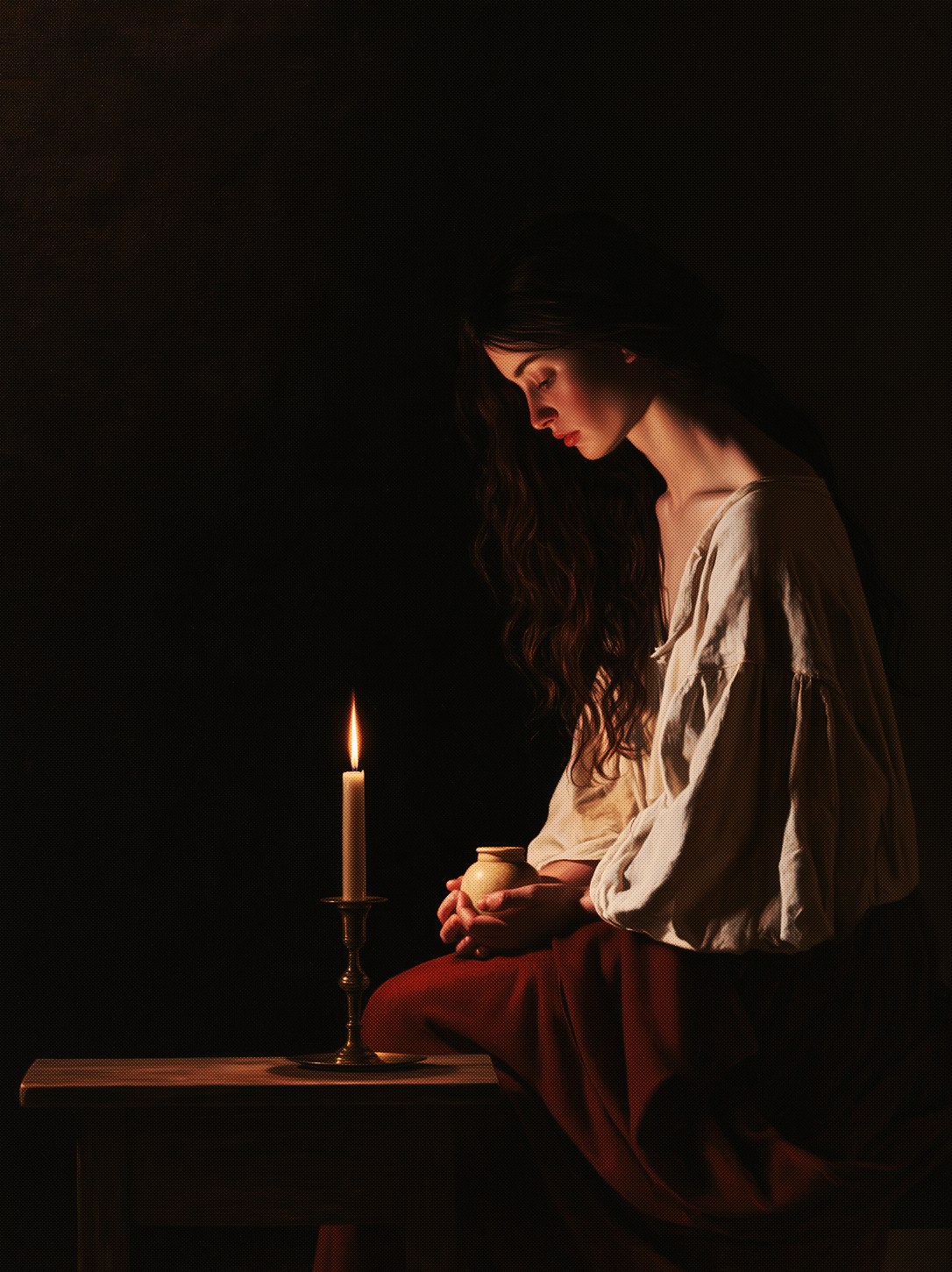
Saint Mary Magdalene
- Born
- 1st century · Magdala, Galilee (Israel)
- Died
- Unknown
- Feast day
- 22 July
- Canonized
- Pre-Congregation
Patron of
- pharmacists
- perfumers
- gardeners
- hairdressers
- glove makers
- repentant sinners
- La Maddalena
- Atrani
- Casamicciola Terme
- Castiglione del Lago
- Porretta Terme
- Ripatransone
Mary Magdalene takes her name from Magdala, the fishing village on the western shore of the Sea of Galilee that is traditionally given as her home. Beyond what the Gospels tell, very little is known of her life, and she left no writings. Scholars, religious and secular alike, accept that she was a real person. The Gospel of Luke introduces her in its eighth chapter. Jesus was traveling through towns and villages announcing the good news of the kingdom of God, with the Twelve and several women who had been cured of evil spirits and illnesses and who supported them from their own means. Among these women was Mary, called Magdalene, from whom seven demons had gone out.
Over the centuries Mary was often remembered as a prostitute, but nothing in the text says so. Biblical scholars point out that the seven demons could stand for a severe physical or moral affliction from which Jesus freed her. The idea took hold because the previous chapter of Luke tells of an unnamed sinful woman in the city who wet Jesus's feet with her tears, dried them with her hair, and anointed them with perfumed oil in a Pharisee's house. Nothing in the text connects her to Mary of Magdala. John's Gospel tells of another anointing, by Mary of Bethany, the sister of Martha and Lazarus, and some popular traditions merged Mary of Magdala with her as well. The Latin Church long joined the three women in its liturgy, following Pope Gregory the Great's reading of the Gospels, while the Greek liturgy commemorated them separately. The current calendar honors the woman to whom Jesus appeared after the Resurrection.
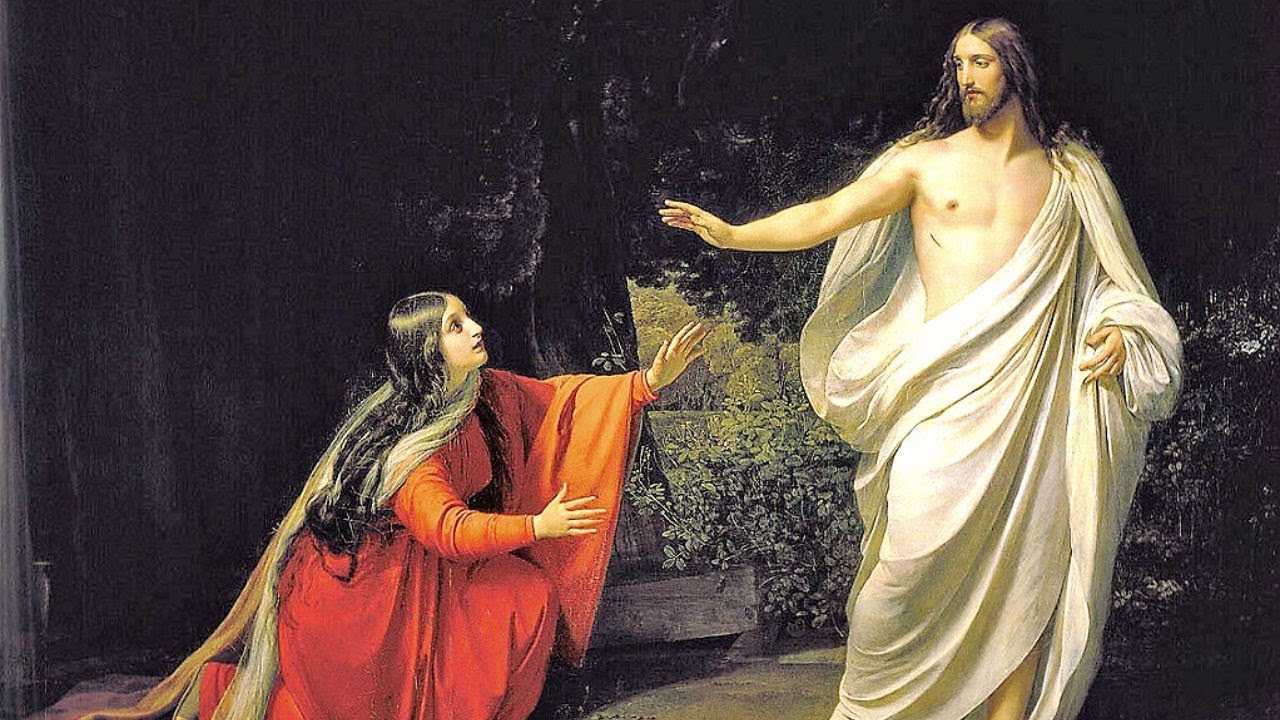
The Gospels place her at the most terrible hour of his life. She went with him to Calvary and, with other women, watched from a distance. She was still there when Joseph of Arimathea laid his body in the tomb, which was closed with a stone. After the Sabbath, early on the first day of the week, she returned to the tomb. The Martyrology records that she was the first to see the risen Savior on Easter morning, and that she carried the news of the Resurrection to the other disciples.
For that reason she is called the Apostle to the Apostles, a title credited to Thomas Aquinas. The Orthodox Church has long honored her as a myrrhbearer and equal to the apostles, and has always kept her distinct from the other women of the Bible. Relics of her are claimed in several places, including France and Mount Athos. In art she is usually shown with a jar of ointment. The Church celebrates her feast on July 22.
Saint Mary Magdalene, pray for us.
Media

Divine Mercy
Catholic Online

Divine Mercy

Divine Mercy
Art
The Magdalen Reading
Rogier van der Weyden · 1435
Public domainNoli me tangere
Titian · 1514
Public domainPenitent Magdalene
Titian · 1563
Public domainMartha and Mary Magdalene
Caravaggio · 1598
Public domainMagdalene with the Smoking Flame
Georges de La Tour · 1642
Public domainMary Magdalene
Frederick Sandys · 1858
Public domain