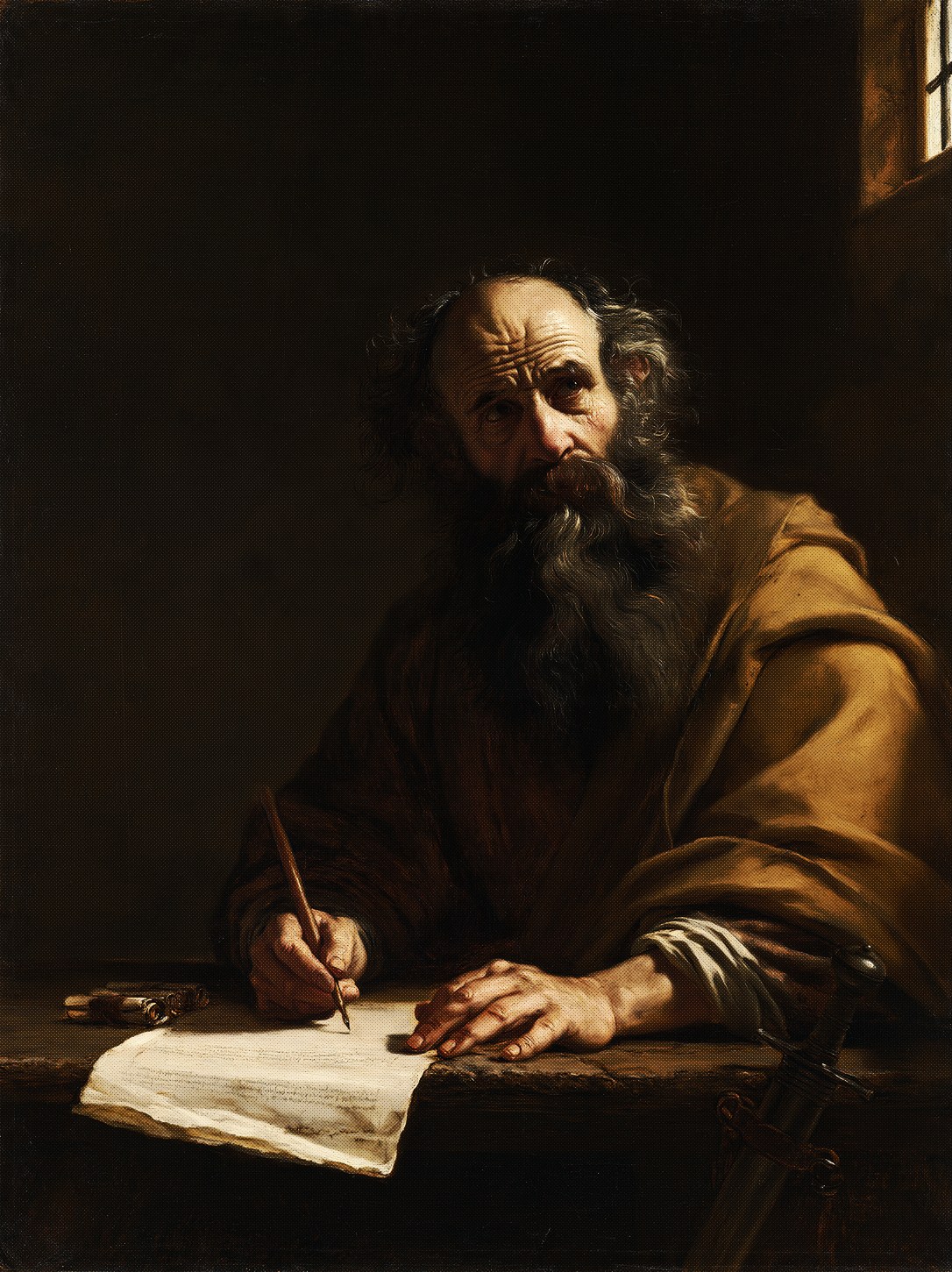
Saint Paul the Apostle
- Born
- c. 5 · Tarsus, Cilicia (Turkey)
- Died
- c. 64/65 · Rome, Italy
- Feast day
- 29 June
- Canonized
- Pre-Congregation
Patron of
- missionaries
- theologians
- evangelists
- Gentile Christians
- Malta
- Greece
- São Paulo, Brazil
- rope makers
- Cursillos in Christianity
- protection against snakebite
- protection against storms at sea
- Diocese of Aversa
Paul's own letters and the Acts of the Apostles are the main sources for his life. He was born around the year 5 at Tarsus in Cilicia, now in southern Turkey, a busy cosmopolitan city where Greeks, Romans, and a Jewish colony lived side by side. His father was a tent maker, and the family held Roman citizenship. Like many Jews of his day he had two names, the Hebrew Saul and the Latin Paul, and Paul became his only name once he began to preach in the West. He learned Greek at Tarsus, but his education was thoroughly Jewish, and his reasoning and reading of Scripture bore the mark of the rabbinic schools.
As a young man he was sent to Jerusalem, where he studied under Gamaliel, one of the most respected teachers of his time. He became a Pharisee, and he saw the first Christians as a dangerous sect within Judaism that had to be stopped. According to Acts, he took part in the persecution of the disciples of Jesus. He had not known Jesus during his lifetime.
That changed on the road to Damascus, where he was going to arrest Christians. A bright light struck him, he heard Christ speak, and he was blinded. A disciple named Ananias healed him, and Paul was baptized. He began at once to proclaim that Jesus of Nazareth was the Messiah and the Son of God.
From the mid-40s to the mid-50s he made three missionary journeys, founding Christian communities in Asia Minor and Europe. He took part in the early Church's debates over whether Gentile converts needed to be circumcised, and he preached to Jews and Greeks alike, which earned him the title Apostle of the Gentiles. Fourteen New Testament letters have traditionally been attributed to him, and scholars accept seven of them as certainly his. Through his preaching and his writing he carried the Gospel into the Greek-speaking world, and Christian theology has drawn on his letters ever since.
Paul ended his life in Rome. The Roman Martyrology says that he and Peter both announced the Gospel in the city and died as martyrs under Nero, Paul by the sword, and that he was buried on the Via Ostiense, where the Basilica of Saint Paul Outside the Walls stands. His memory is kept on 29 June together with Peter's, and the Church marks his conversion on 25 January.
Saint Paul the Apostle, pray for us.
Media

The Catholic Talk Show

Bishop Robert Barron

Bishop Robert Barron

Bishop Robert Barron
Art
Saint Paul
Giotto · 1291
Public domainSaint Paul
Masaccio · 1426
Public domainSaint Paul Preaching at Athens
Raphael · 1515
Public domainThe Conversion of Saint Paul
Parmigianino · 1527
Public domainSaints Peter and Paul
El Greco · 1587
Public domainSaint Paul
Diego Velázquez · 1618
Public domain