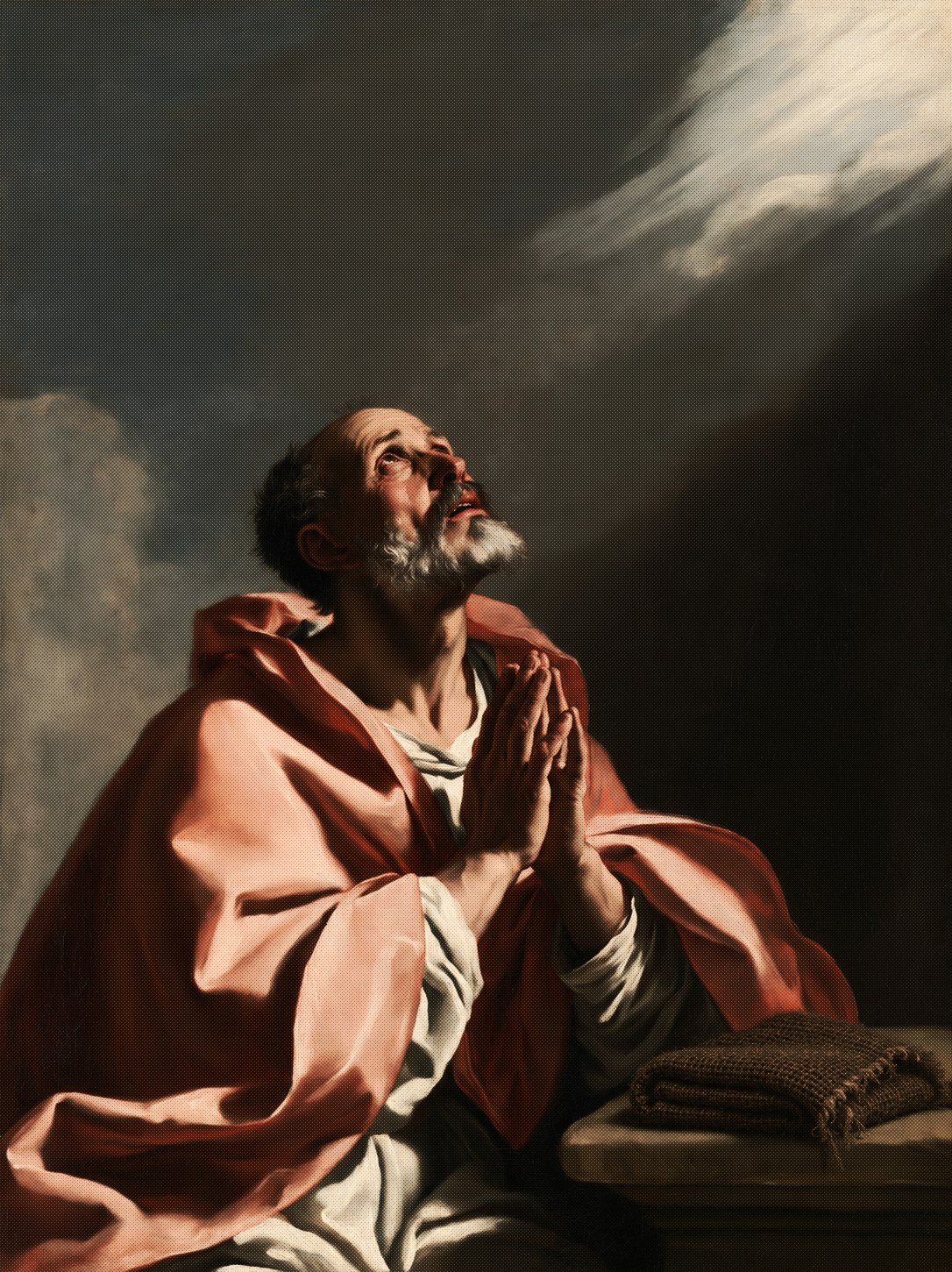
Saint Valentine of Terni
- Born
- Terni, Italy
- Died
- c. 270 · Rome, Italy
- Feast day
- 14 February
- Canonized
- Pre-Congregation
Patron of
- engaged couples
- love
- happy marriages
- epilepsy
- beekeepers
- against fainting
- Terni
- Diocese of Terni-Narni-Amelia
- Breno
- Courmayeur
- San Valentino Torio
- Vico del Gargano
The oldest record of Valentine is an official church document of the fifth or sixth century that lists the anniversary of his death. A document of the eighth century adds details of his martyrdom: torture, beheading by night, and burial by his disciples Proculus, Ephebus, and Apollonius, who were martyred in their turn and buried as well. His Passion, written down later, tells the rest of the story.
According to that Passion, Valentine was a citizen of Terni and its bishop, famous for the holiness of his life, his charity and humility, his zeal, and his miracles. Three noble young men from Athens, Proculus, Ephebus, and Apollonius, had come to Rome to study under the rhetor Craton, a teacher of Greek and Latin. Craton's son Cheremon had a deformity that kept him curled up, and no doctor could cure him. A man named Fonteius told Craton that his own brother had been cured by Valentine, the bishop of Terni. Craton sent for the bishop and promised him half of everything he owned if the boy was healed. Valentine answered, in a long conversation through the night, that riches would not heal the boy but faith in the one God would, and Craton promised to be baptized once his son was well.
Valentine then withdrew to a room, laid the boy on his own hair shirt, and prayed all night until a dazzling light filled the place and Cheremon leaped to his feet healed. Craton and his whole household were baptized, as were the three Athenian students and another student, Abundius, the son of the prefect of Rome.
Scholars long tried to sort out two saints of the same name who were venerated on the same day, a Roman priest and the bishop of Terni. Historians now generally conclude that there was one martyr, the bishop of Terni, and that the Roman priest seems never to have existed. Valentine was buried on the Via Flaminia, and his feast on 14 February has been observed since at least the eighth century. His relics were kept at a church and catacombs in Rome that remained an important pilgrim site until they were moved to Santa Prassede, and his skull, crowned with flowers, is shown in the basilica of Santa Maria in Cosmedin. Other relics rest in the Whitefriar Street Carmelite Church in Dublin, a popular place of pilgrimage for people seeking love.
From the High Middle Ages his feast became linked with courtly love, which led to the modern Saint Valentine's Day. In 1969 the Catholic Church removed his name from the General Roman Calendar, leaving his celebration to local calendars, but it still lists him as a saint in the Roman Martyrology.
Saint Valentine of Terni, pray for us.
Media

Matt Fradd

EWTN

EWTN News

EWTN
Art
Saint Valentine of Terni
15th century
Photo by Giosuè Tacconi · CC BY-SA 4.0Saint Urban and Saint Valentine
School of Württemberg · 1509
Public domainMagdalene Altar: Saint Valentine
Lucas Cranach the Elder · 1522
Public domainSaint Valentine Baptizing Saint Lucilla
Francesco Bassano the Younger · 1575
Public domainSaint Valentine Healing an Epileptic
1899
Public domain